
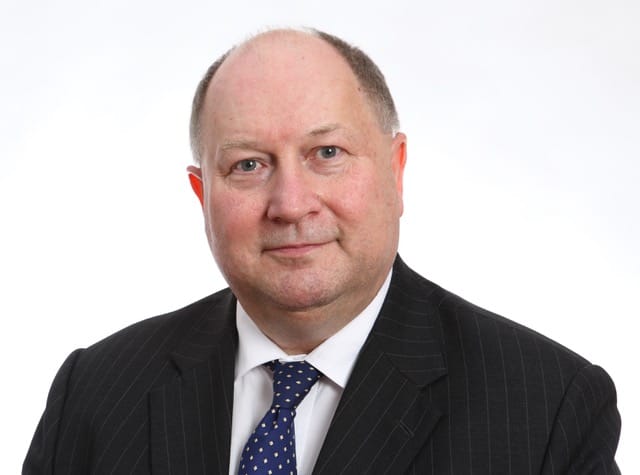
As the UK marks 20 years since the 7 July 2005 London bombings this week, EMICS doctor Dr Peter Holden reflects on his role in the emergency response to the Tavistock Square bus explosion, an event that helped shape Britain’s approach to pre-hospital care and major incident planning.
At 09:47 on that Thursday morning, a suicide bomber detonated an explosive device on a double-decker bus in Tavistock Square. It was the fourth coordinated attack on London’s transport network that day, killing 52 people and injuring hundreds more. The bus blast occurred directly outside BMA House, the headquarters of the British Medical Association.
Dr Peter Holden, a GP and Volunteer Doctor with EMICS (East Midlands Immediate Care Scheme), was inside the building when the explosion occurred. He had been due to attend a separate engagement that morning but was in the building for a meeting. That decision placed him metres from the attack site, close enough to feel the blast.
“Everything went salmon pink… and then came the bang,” he recalls. “That was the pressure wave from the explosion. I remember thinking this is a bomb.”
Dr Holden was among 16 doctors on site that day. With no warning and no medical equipment, they quickly turned BMA House into an improvised casualty clearing station. Table tops were converted into stretchers. Curtain fabric was cut into makeshift bandages. A chef used a commercial ladle to tighten a tourniquet on a bleeding victim.
“You work with what you have,” Dr Holden said. “Basic trauma principles: airway, breathing, circulation still apply, no matter the setting.”
He immediately assumed command of the scene, applying the five principles of major incident response: Command, Control, Communication, Coordination, and Cooperation.
“People just looked at me and said, ‘Peter, this is your sort of scene. Tell us what to do.’ That was the moment I stepped up.”
Working together with colleagues, the team triaged over 30 casualties, treating several with life-threatening injuries. By 12:15pm, less than two hours after the blast, all patients had been stabilised and evacuated.
Despite the calm execution of care, the emotional and psychological atmosphere was striking.
“There was no sound, no aircraft, no birds. Just the occasional siren in the distance. It was eerie.” “I remember for a moment thinking of my wife and son. But you put it aside. The best way to see them again is to get on with the job.”
He added “We can let the horror of the mechanisms get to us, or we can just say ‘this is an injured patient’, get on with it. And that was what we did.”
In the immediate aftermath, there was speculation over the scope of the attack. Dr Holden recalls a colleague wondering if it was a 9/11-style event.
“Someone asked, ‘Do you suppose this is a 9/11?’ And I said, well, of all the buildings in London, why would they pick this one to fly a plane into?”
The response team itself reflected the diversity of the UK, Dr Holden notes.
“We were a multi-faith, multi-ethnic medical team, assembled instantly and working together”
Located within BMA House, the courtyard is officially dedicated to medical personnel who served and died in the First and Second World Wars. On that day in 2005, it became a scene of modern conflict.
“To be treating casualties of a terrorist attack, under pressure, in a space dedicated to fallen doctors was humbling,” Dr Holden said. “I hope we did them proud.”
That same evening, Dr Holden travelled to Norwich drafting a detailed report of the day’s events on the train. “I wrote the report before I went to bed. It’s how I remember everything so clearly.”
He later gave evidence to the official inquiry and contributed to international publications, including The New England Journal of Medicine. His report also helped highlight weaknesses in communications infrastructure and inter-agency response, many of which have since been addressed.
“Prehospital emergency medicine was considered niche at the time. Not anymore. 7/7 showed what skilled volunteer doctors can achieve.”
Dr Holden is still an active responder with EMICS, a voluntary doctor scheme supporting East Midlands Ambulance Service.
Today, EMICS continues to respond to road traffic collisions, cardiac arrests, traumatic injuries and medical emergencies across Derbyshire, Nottinghamshire, Leicestershire, Rutland and Lincolnshire. Doctors and paramedics often arrive ahead of hospital teams, delivering life-saving care.
“We’re not the NHS. We’re not the air ambulance. But we are there, and we’re trained. The public often doesn’t know who we are, but we make a difference.”
Now serving as Vice President of the British Association for Immediate Care and Treasurer of the BMA, Dr Holden continues to support emergency preparedness at the highest levels.
“Was it life-changing? No. Life-demarcating? Yes. There’s before and after. You never forget.”
“Society asks us [medical professionals] to do ordinary things under extraordinary circumstances. We train for that. But we’re human too. What happened that day shaped who we are, and how we respond.”
As the UK reflects on the 20th anniversary of 7/7, EMICS honours the lives lost, and recognises the volunteers, clinicians, and first responders who stood up in a moment of profound national trauma. Some in suits, without equipment, in a courtyard built to remember the fallen.
But emergencies don’t wait for cities, hospitals or even uniforms. And neither do EMICS medics.
We rely on charitable donations to fund our critical care, equipment, training and deployment. With no direct NHS funding, EMICS medics give their time, but need public support to continue delivering specialist care.
To support EMICS and help save lives across the East Midlands, please consider donating today at www.emics.org.uk.